This experience was designed for desktop viewing.
Orpheus
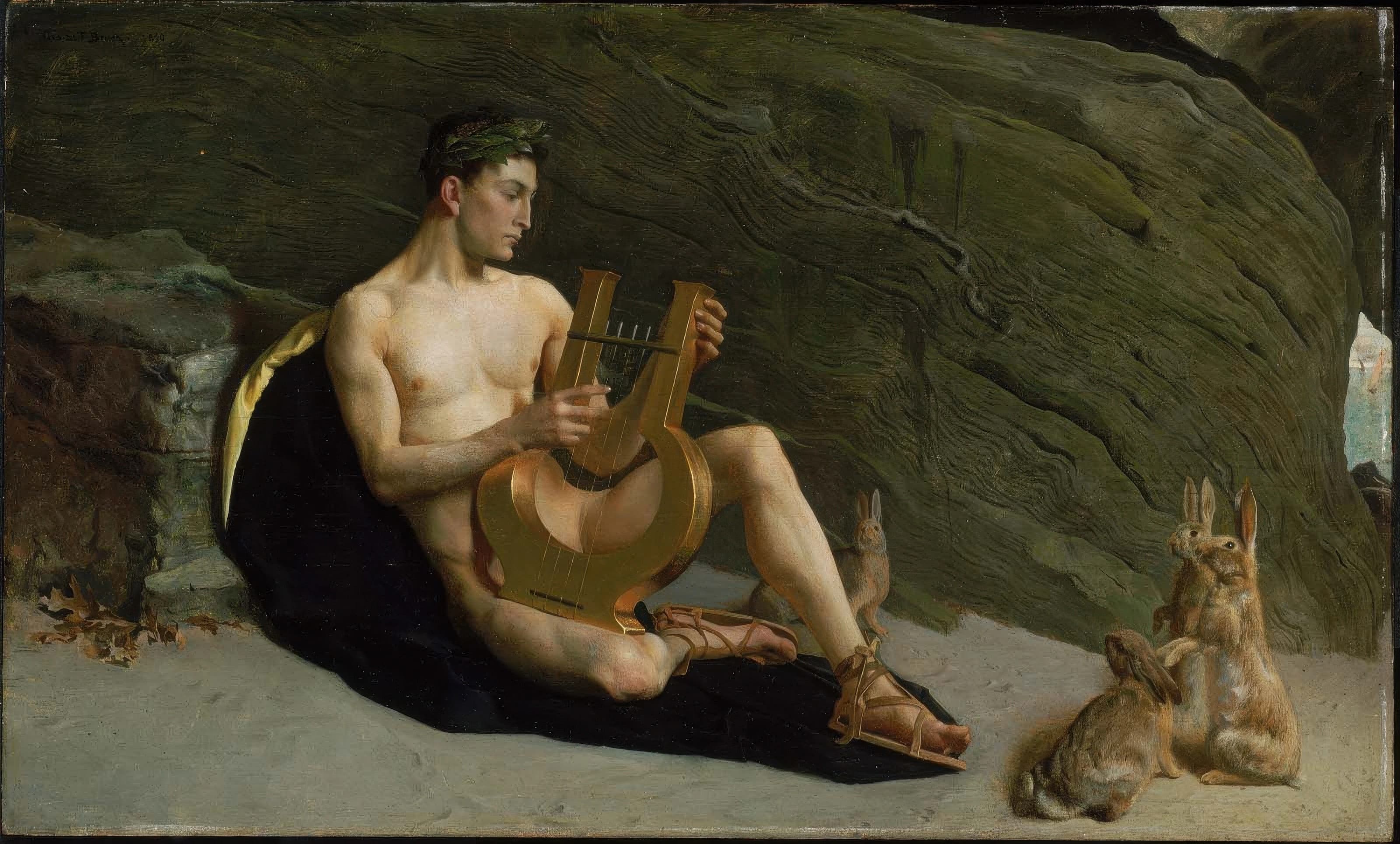
Painted by George de Forest Brush in 1890, depicting a group of rabbits being drawn towards orpheus’ music.
The Tale of
Orpheus
Born to Calliope, the muse of epic poetry, Orpheus possessed a natural gift for music.
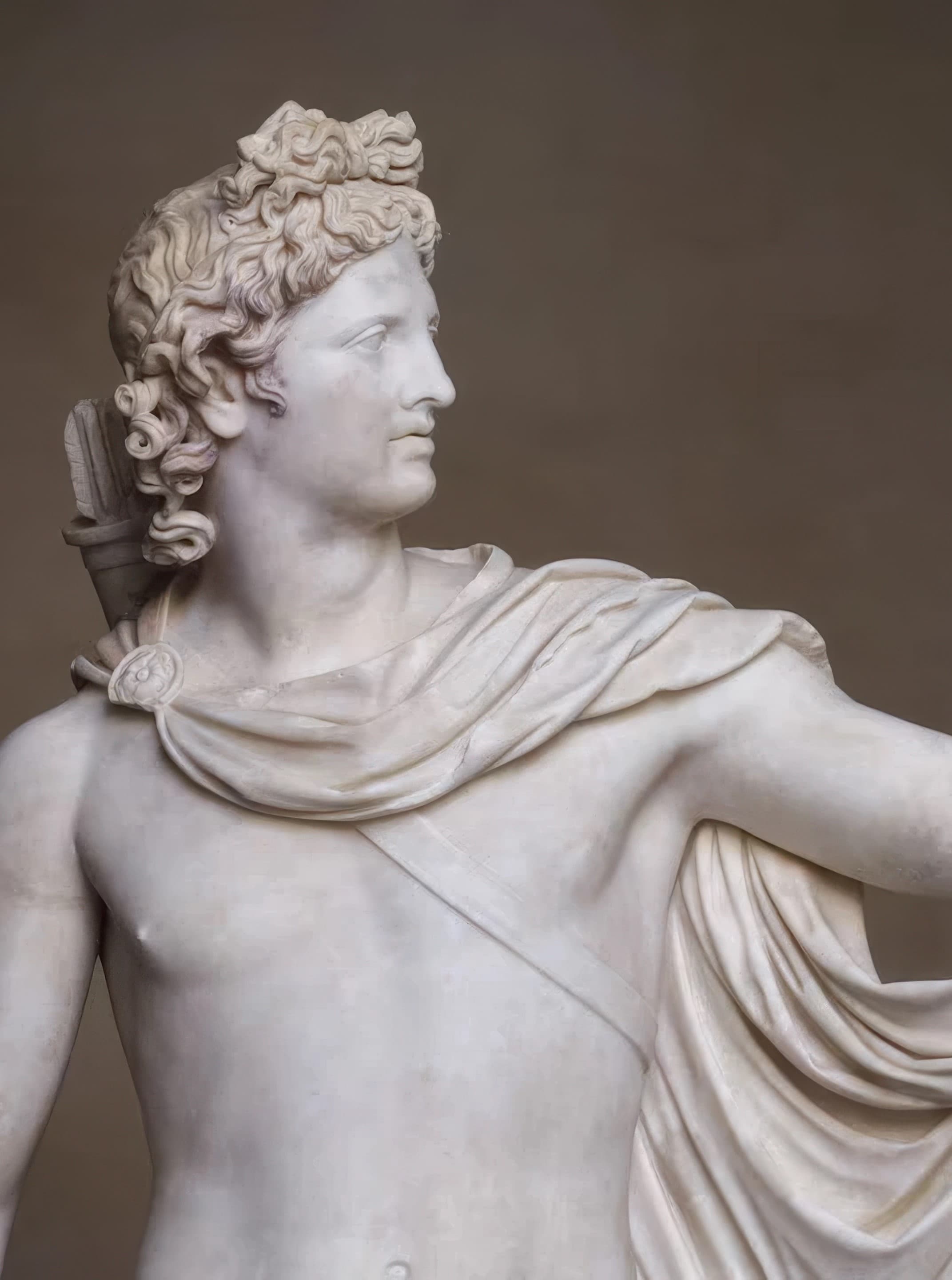
Recognizing his gift, Apollo, god of music, taught Orpheus his art and gifted him a golden lyre. It was said that after his teachings, that no being — god, mortal, or beast — could resist Orpheus’ melodies and he thus became the most famed musician.
Orpheus fell in love with a woman named Eurydice, and their marriage, though brief, was filled with happiness.
When she died, grief consumed him. Driven by longing, he attempted what only a handful of mortals had dared.
Armed with his lyre and unwavering devotion, Orpheus descended into Hades, seeking to reclaim the woman he loved.
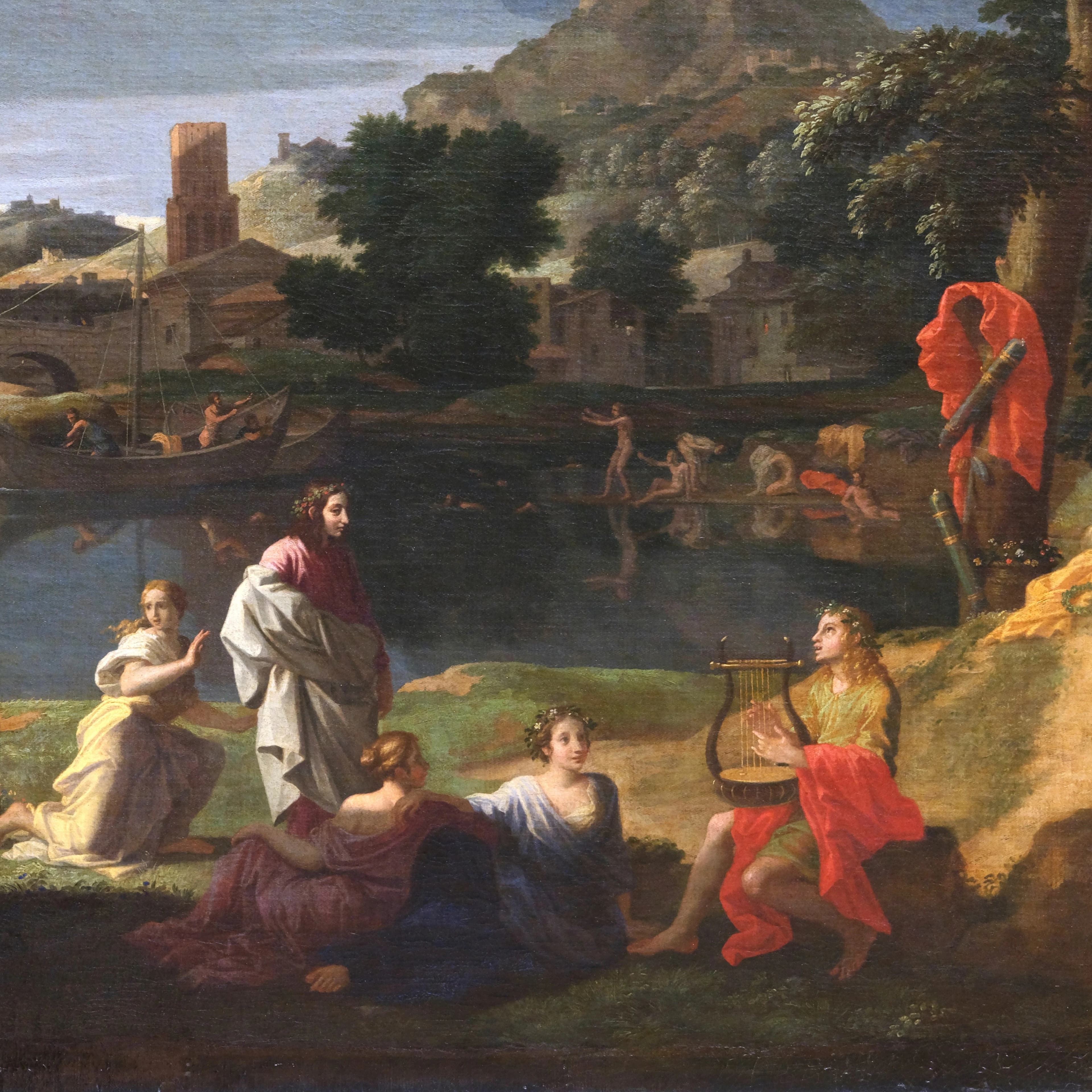
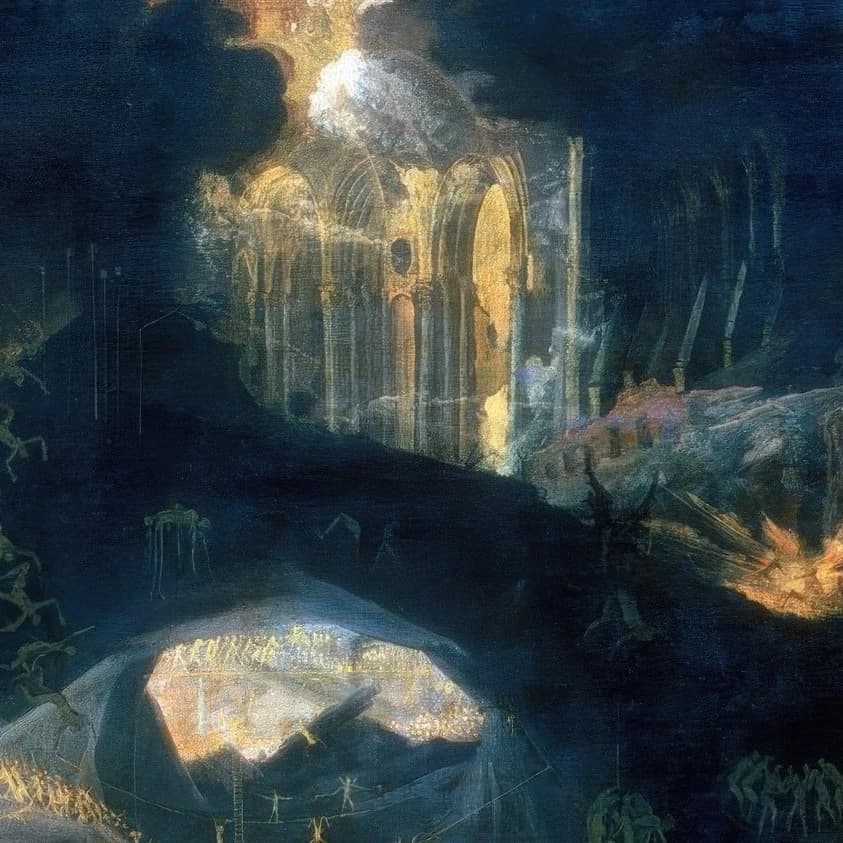
Landscape with Orpheus and Eurydice
Painted by Nicolas Poussin somewhere between 1625-1650.
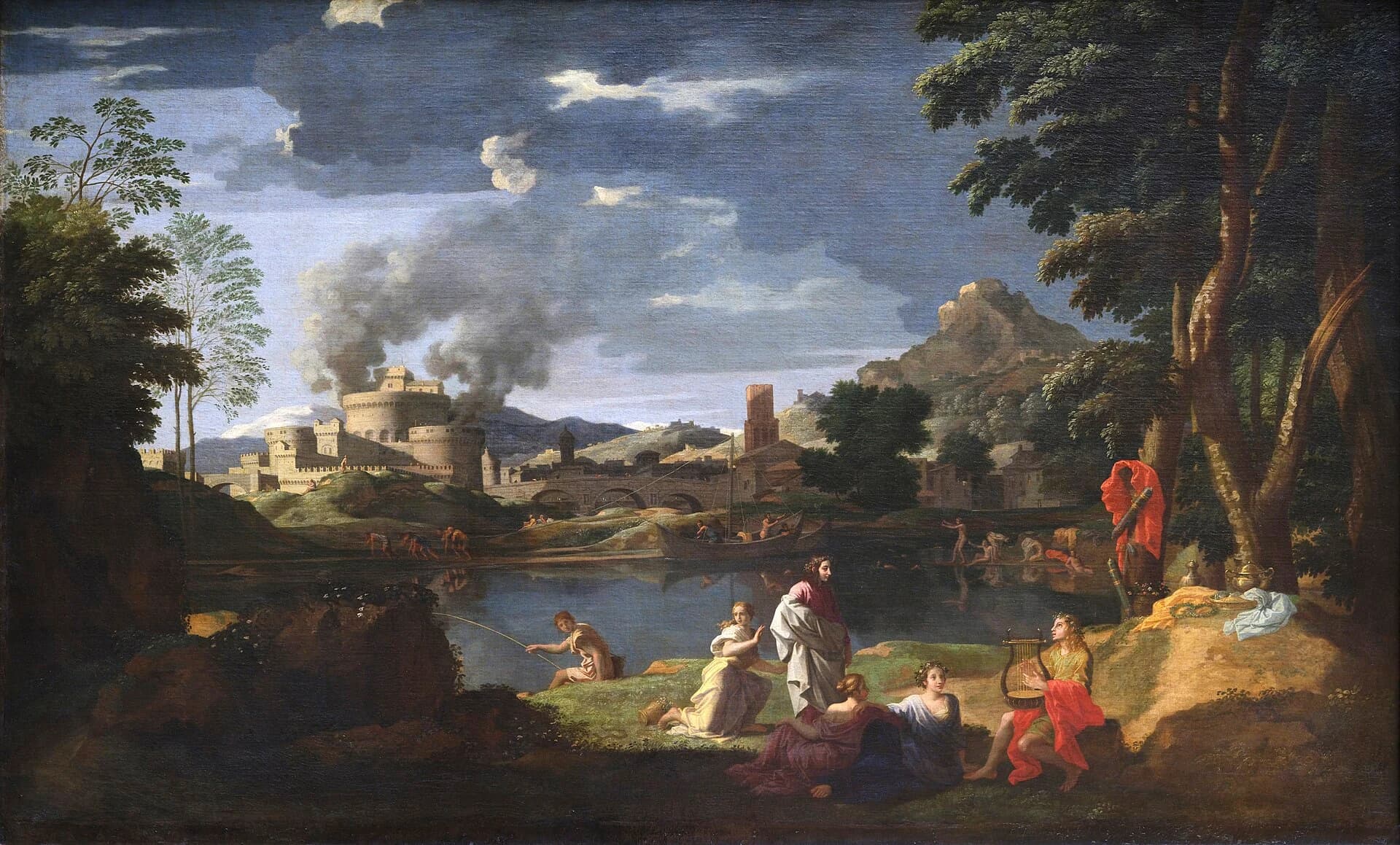
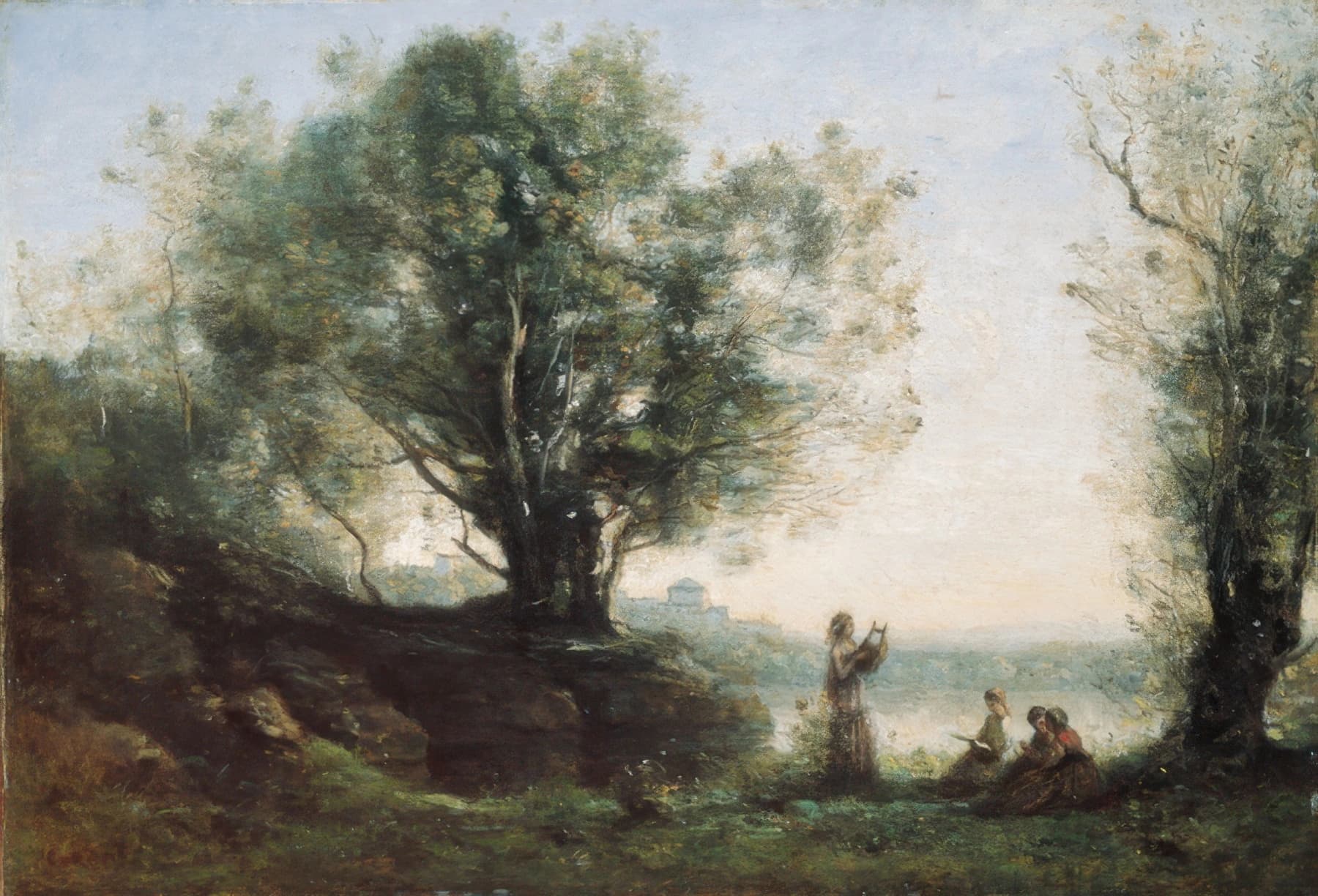
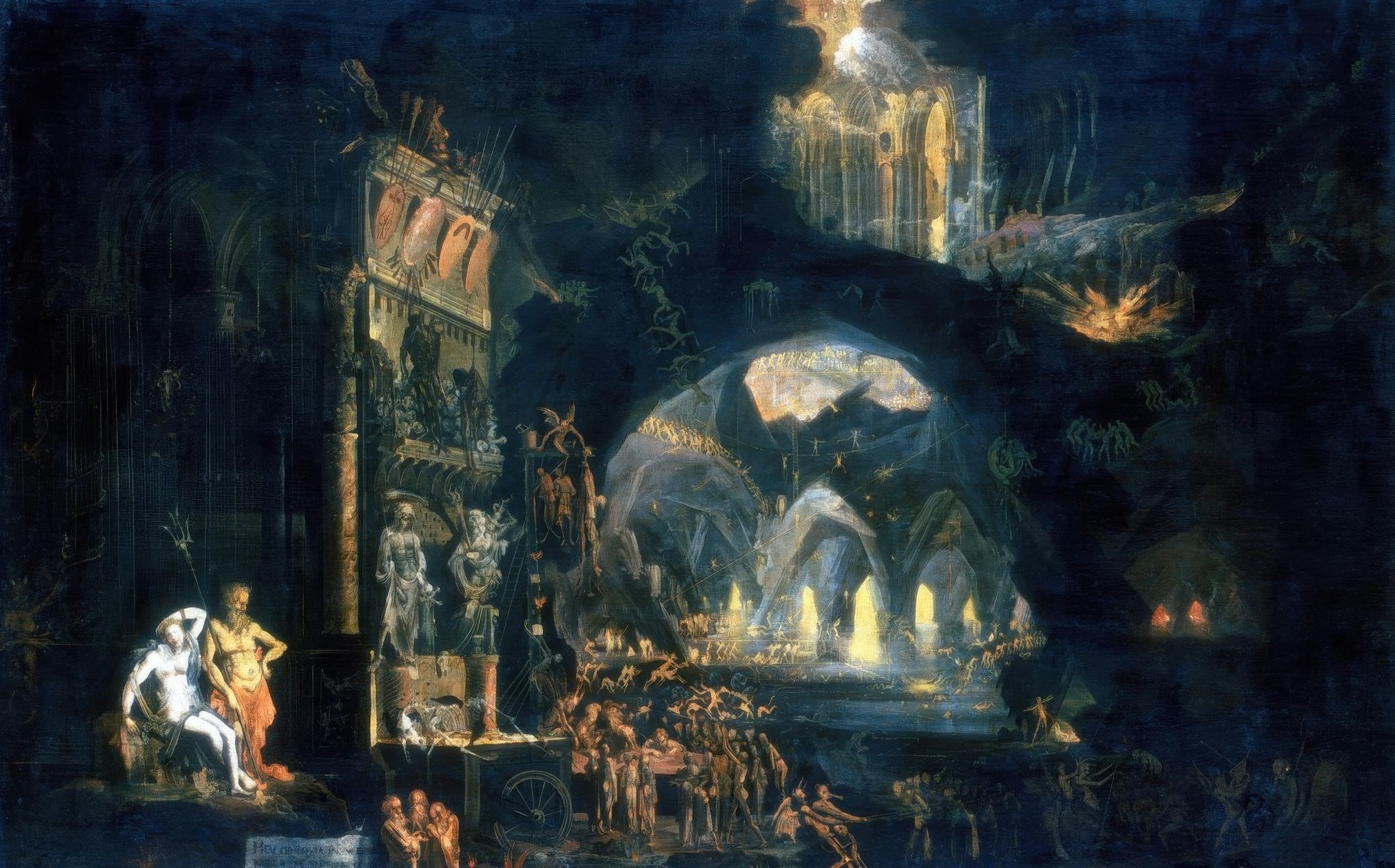
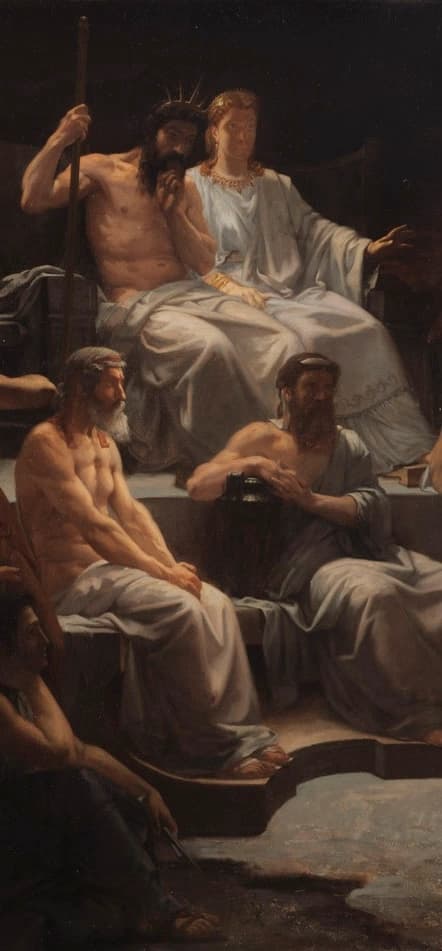
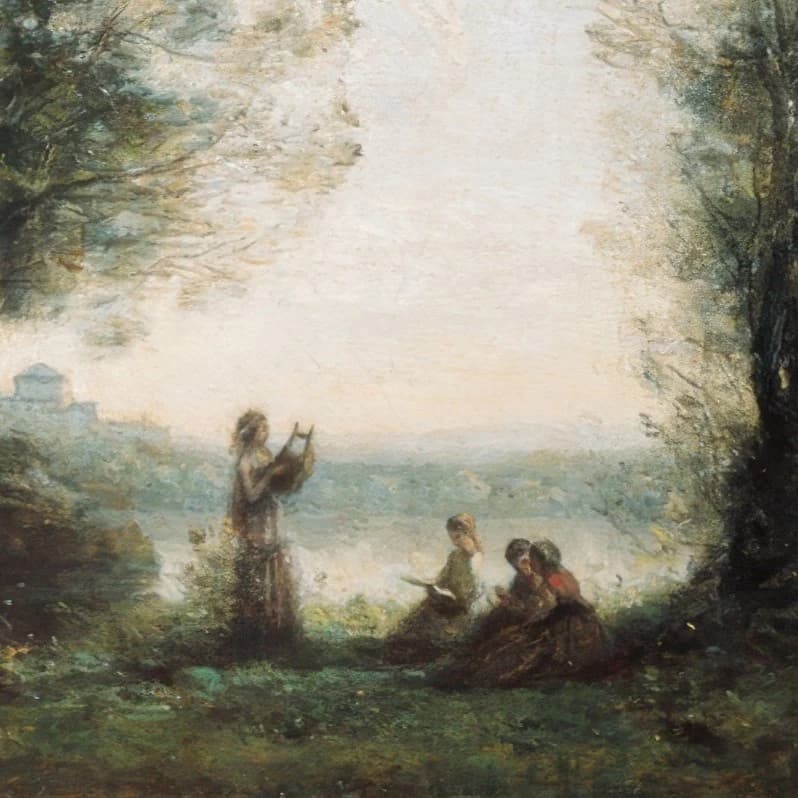
Orphée aux enfers
Painted by Louis Jacquesson de la Chevreuse in 1863, depicting Orpheus playing a melody for Hades and Persephone.
Standing before Hades at his throne, Orpheus raised his lyre and sang of his longing for Eurydice — touching the hearts of both the god of the dead and his wife, Persephone.
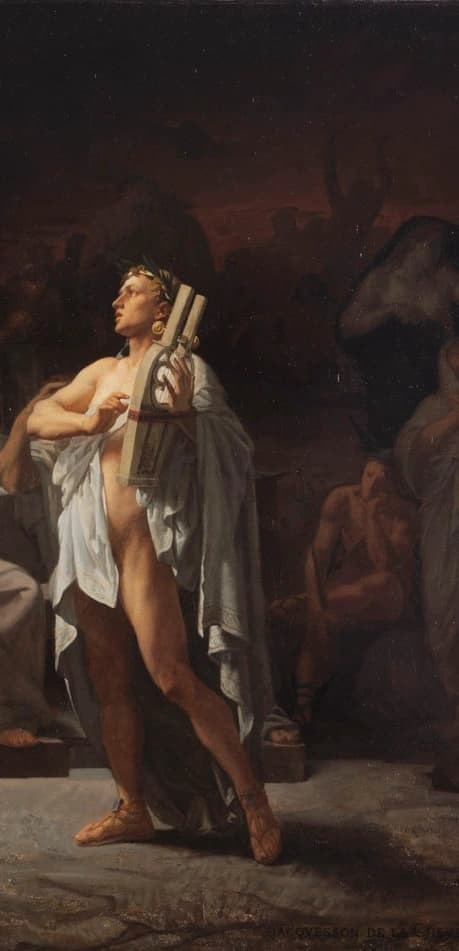
Moved by his melody, Hades took pity on Orpheus, and let him escape back to the land of the living, with Eurydice accompanying him.
“Under two conditions,” Hades added. “She will always be behind you — and you must not turn to look at her.”
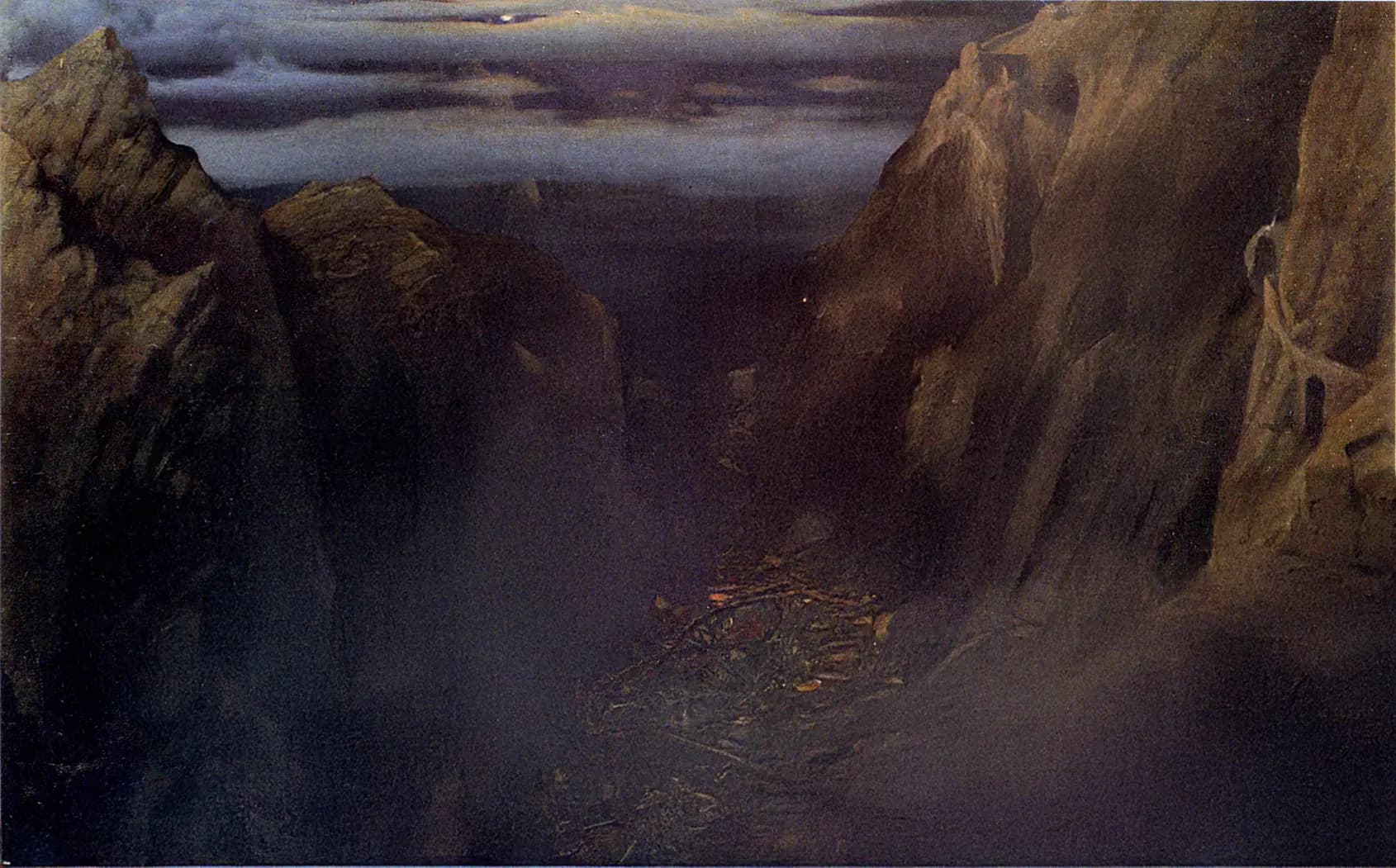
Taking it as a simple test, Orpheus offered his gratitude to the lord of the dead and hurried toward the living world, vowing to never look back.
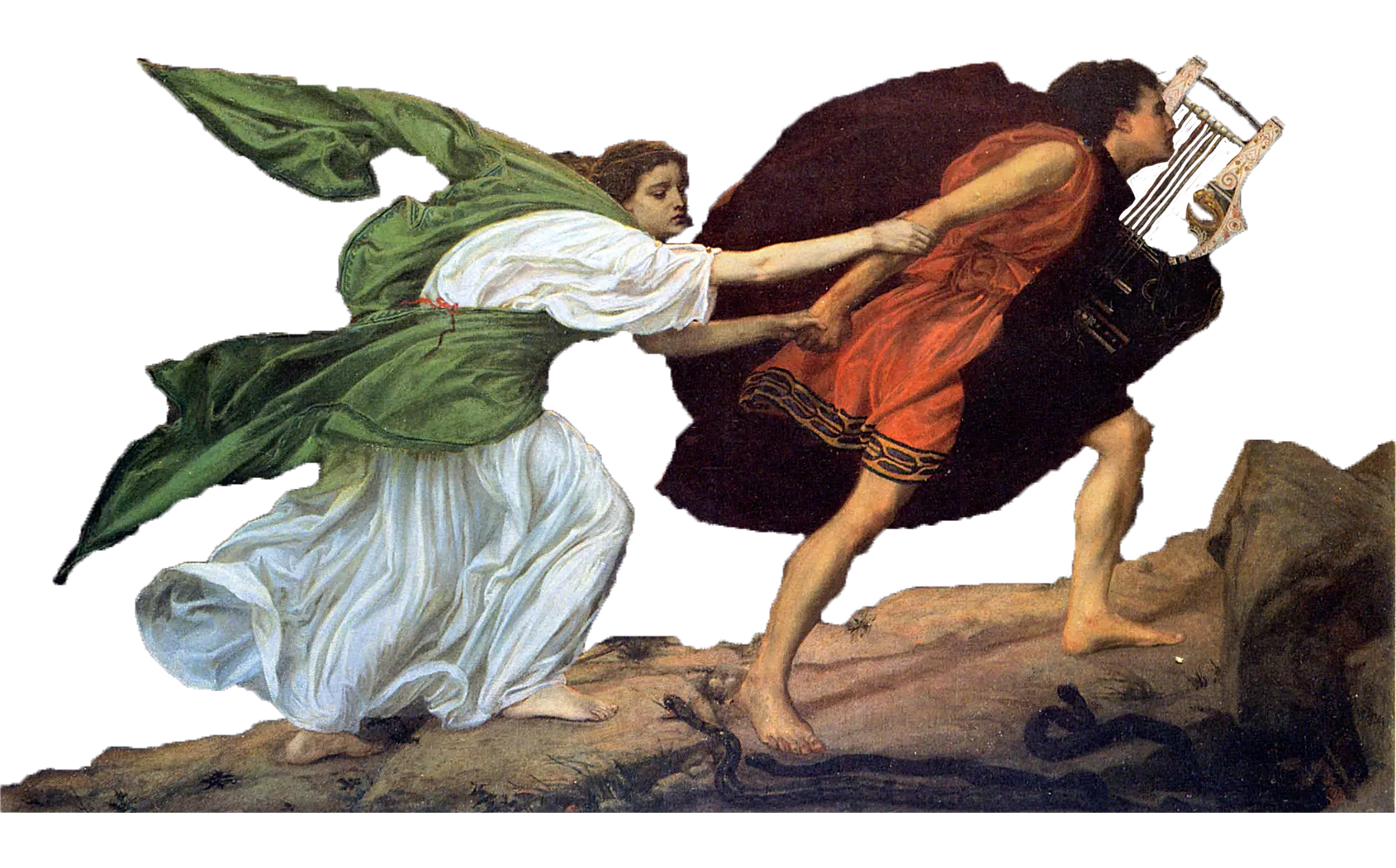
Orpheus & Eurydice
Painted by Edward Poynter in 1862, depicting eurydice holding on to orpheus’ arm as they leave the underworld.
The journey back was steeped in silence. Though Hades had sworn Eurydice would follow close behind, Orpheus heard no footsteps, no breath, no whisper of his name, and doubt began to strangle him.
So he turned.
Orpheus’ heart sank when he saw Eurydice standing behind him in her translucent form, a single tear trickling down her face. He tried to find the words to apologize, but she raised her hand and offered him a gentle smile, silently mouthing a few final words.
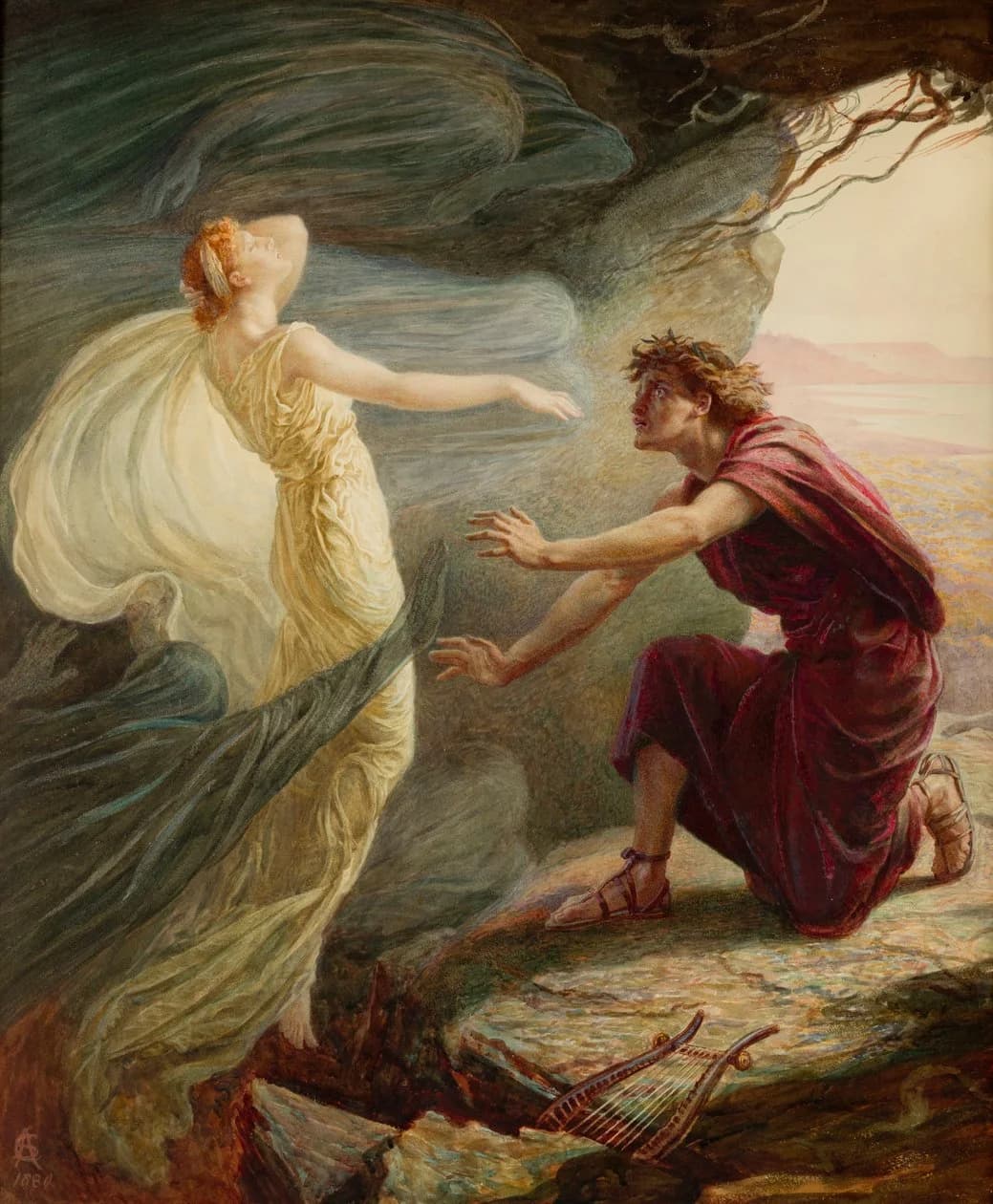
Orpheus and Eurydice
Painted by Catharine Adelaide Sparkes somewhere in 1842-1910, depicting eurydice fading back into the underworld after orpheus turned around.
Thank you for coming for me.
Orpheus dropped his lyre and clawed at the dirt of where she was, as her ghostly form drifted back into the underworld.